tendrenetic (2026)
weather citizen × caitlin c. harvey
Vander, Detroit
Video credit: weather citizen, with additional footage from 888Creative
TENDRENETIC is a generative and interactive ambisonic audiowork, which premiered in the group show On The Life-History of Spirillum (curated by Always Tomorrow as part of the artist-led winter festival Imbolc 2026).
As a system, it embodies the dynamics of a thriving cybernetic environment, implementing both complex intertwining generative functions and electro-mechanical sensitivity as the infrastructure for an artwork that sonically responds to kinetic incursion and coexistence.
This interactive ambisonic audio player presents an excerpted render of tendrenetic during its time installed at Vander. It is a sonic encoding of how the system was interacted with on site, including moments where tendrils were stepped on, the system was allowed to grow and develop, and then tendrils stepped on again.
To use, simply click LISTEN and drag cursor around the screen to dynamically move listening orientation. The audio will render in real time based on these movements.
For best results, listen on headphones via Brave, Firefox, or Chrome browsers (Safari does not support ambisonic audio).
Binaural rendering by Omnitone (Google, Apache-2.0), using HRIRs from the SADIE database (University of York). Player and interface by weather citizen.
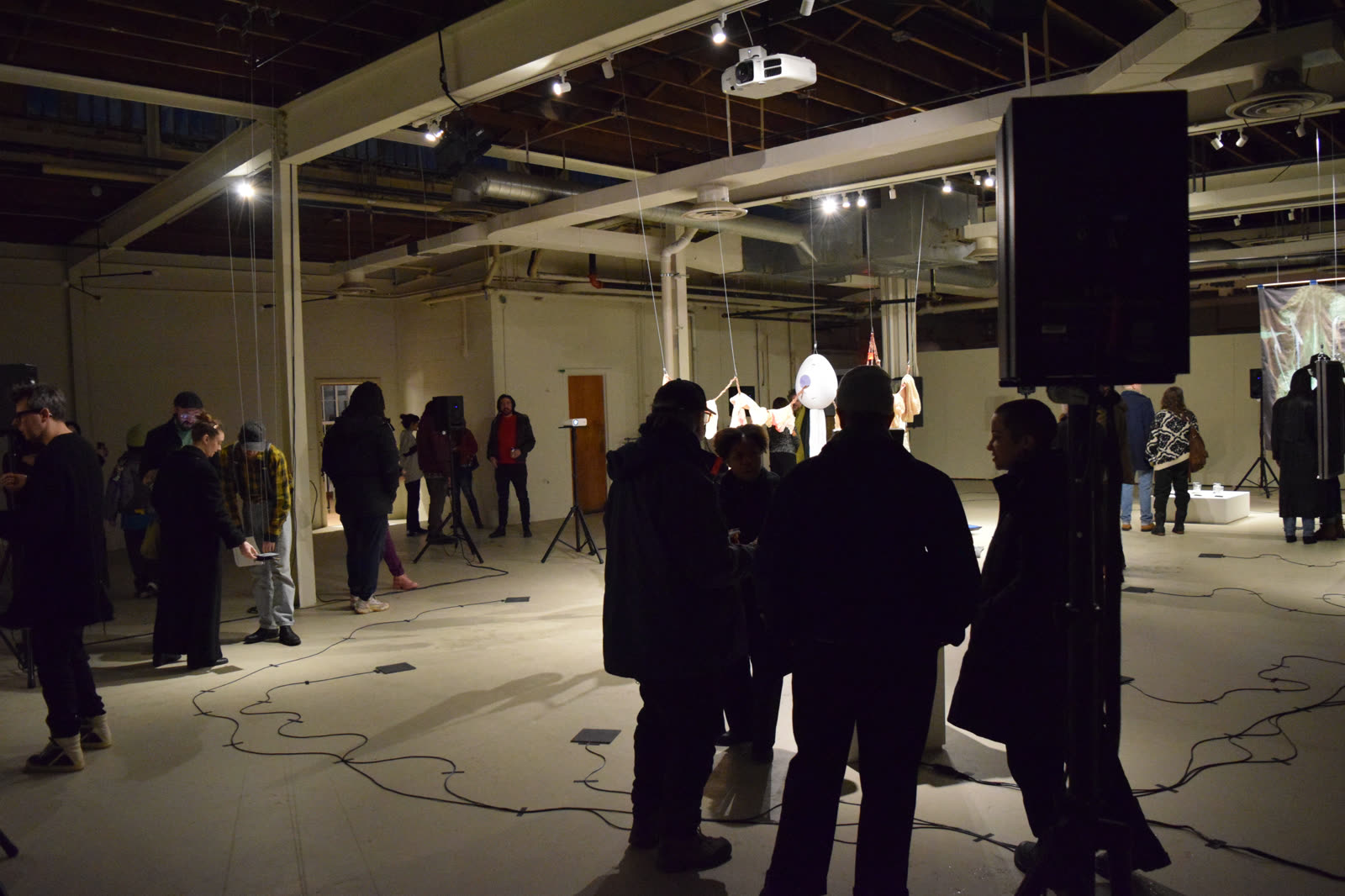
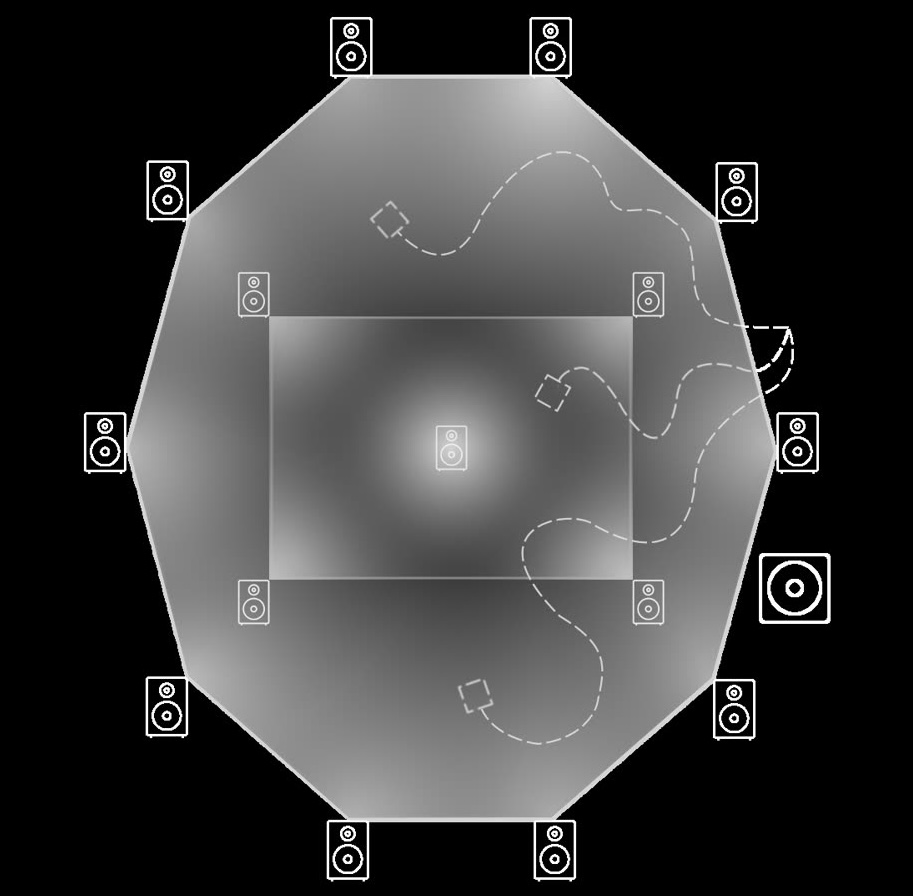
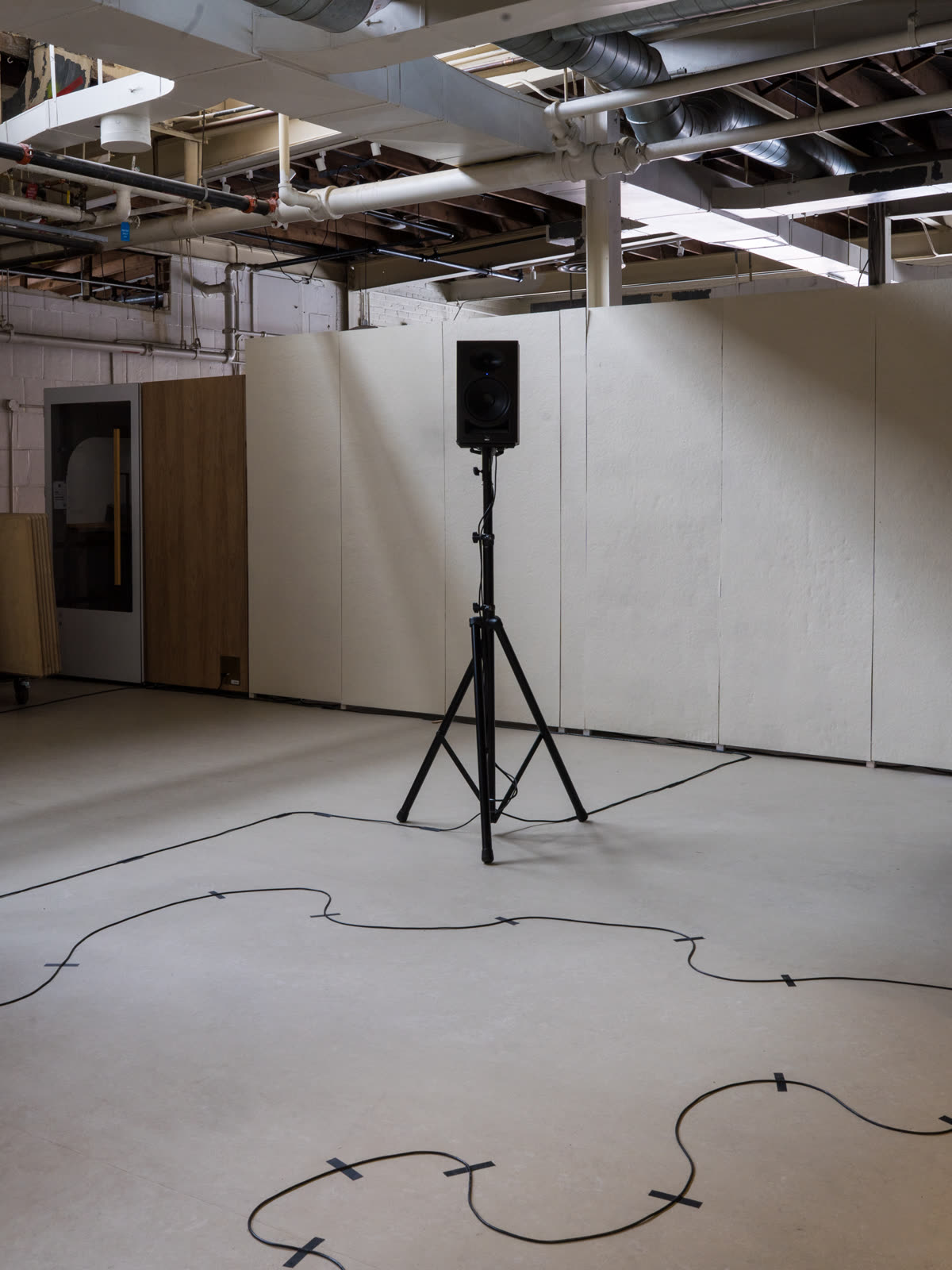
In this installation, the sound system consisted of a hybrid of the Neighborhood Art School's Fieldspeakers system along with personal inventory. 10 nearfield monitors were positioned around the perimeter of the space along with 1 subwoofer, and 5 were flown from the ceiling rafters.
10 custom-built piezo ‘tendril’ sensors were distributed throughout the gallery floor.
The speakers and sensors all connected back to the central nervous system of the piece — a MOTU 16A connected to a mini PC running Ableton Live and an assortment of custom-built Max/MSP patches.
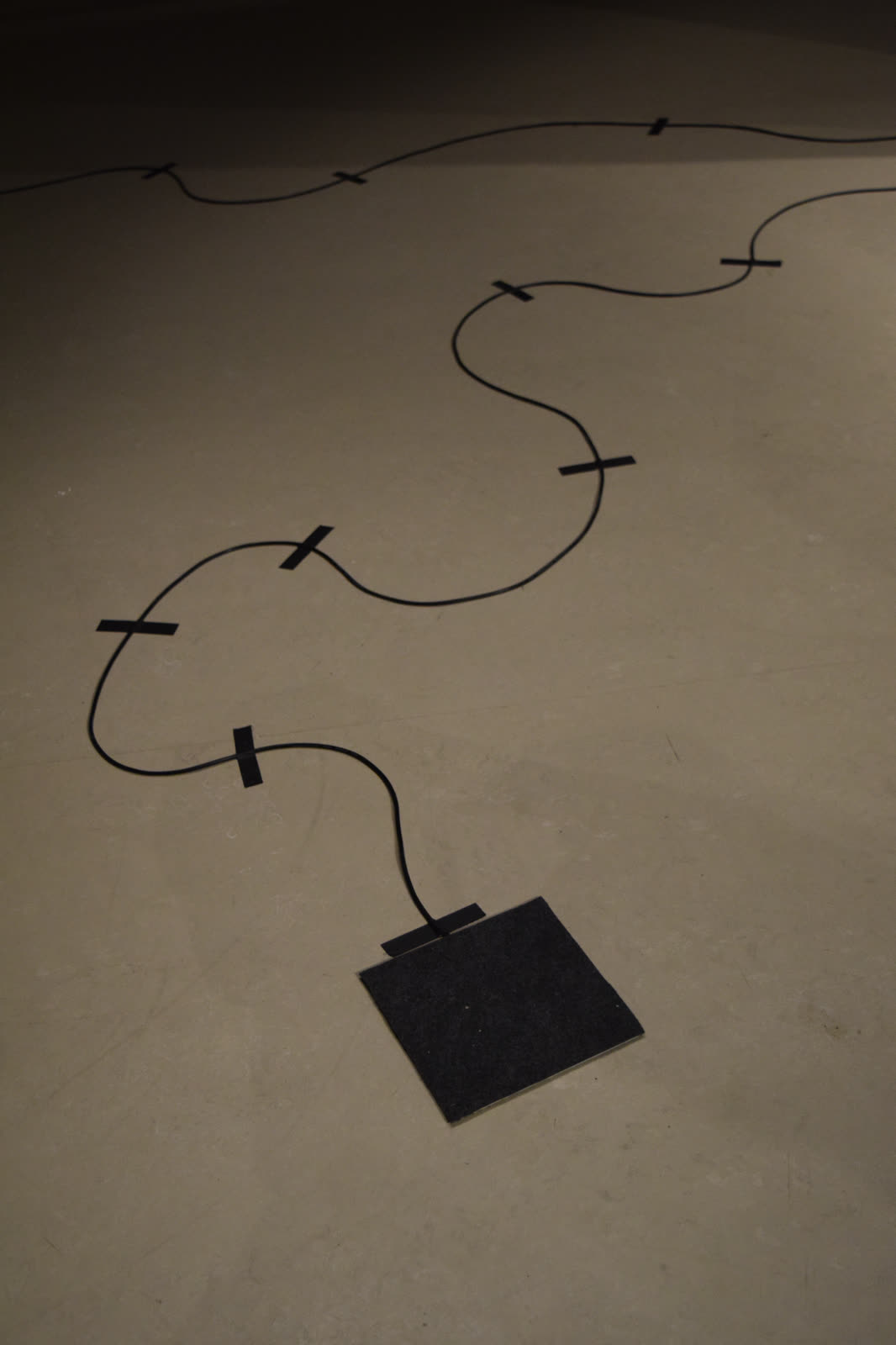
The tendrils throughout the space function as nodes of sensitivity for the sonic biome. Disturbances like footfall cause systemic recoil, reducing the harmonious activity of the network. Each sensor functions like the nervous system of respective elements of the generative work, and once stepped on these elements recoil and hide, only to reemerge after sustained time undisturbed. In order for this piece to thrive, visitors must engage an ecosomatic awareness. And/or, this piece can be hurt and brought to near extinction.
Several custom Max/MSP patches were developed to achieve this generative and responsive system. The video above demonstrates an instance of the ‘intensity’ parameter patches, each sonic element having its own instance. The undulating graph depicts a kind of ‘life force’ for each element, a generative parameter that grows and adapts to the other elements and, crucially, to the activity around its corresponding sensor. As shown in the video, at the moment its tendril is stepped on, the parameter sharply drops to zero, before slowly re-emerging after some time.
Custom sound-making patches were built as well, and their parameters mapped to parameters elsewhere in the system, making them responsive to changes in the soundscape.
This granular sampler, inspired by Oliver Thurley's design, takes a sample of caitlin's voice and manipulates it into an alien sound — part bird, flute, and voice.